
Revolutionary 5 Data Intelligence Cybersecurity Strategies That Will Transform Your Threat Defense in 2025
When you searched for ‘data intelligence cybersecurity’ at 2 AM, you weren’t looking for outdated advice—you needed current, actionable insights. Meet Sarah Chen, a CISO at a mid-sized financial services firm, who just discovered why unified data intelligence matters more than ever in October 2025.
The Bottom Line: What 2025 Data Reveals About Data Intelligence Cybersecurity
Here’s the reality: 78% of CISOs now admit AI-powered cyber-threats are having a significant impact on their organization. Sarah’s team was drowning in alerts from 15 different security tools, each operating in its own silo. With an estimated 2,200 cyberattacks occurring globally each day, fragmented security data isn’t just inefficient—it’s dangerous.
The Avoidance Path: When organizations ignored data intelligence cybersecurity consolidation, they paid the price. The global average security breach cost reached $4.9 million, marking a 10% increase from previous years. Sarah watched competitors struggle with detection delays, missed threat correlations, and burned-out security teams chasing false positives across disconnected platforms.
How Data Intelligence Cybersecurity Actually Impacts Your World in 2025
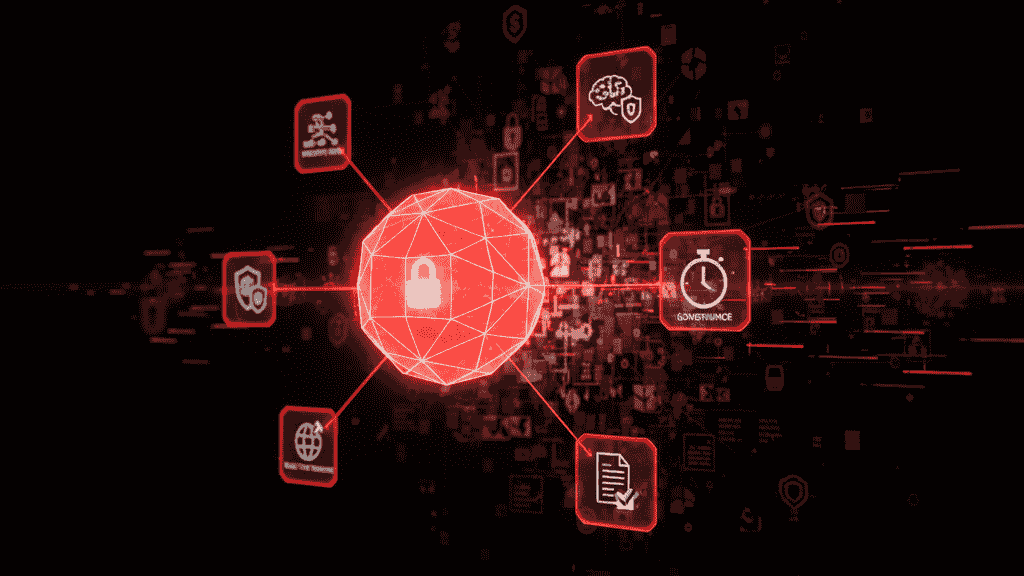
Data intelligence cybersecurity isn’t another buzzword—it’s your defense against an entirely new threat landscape. Databricks launched Data Intelligence for Cybersecurity on September 30, 2025, designed to help organizations defend against modern and AI-driven threats with more accuracy, stronger governance and greater flexibility.
Think about your current security setup. You’re probably running SIEM, EDR, firewalls, cloud security tools, and threat intelligence feeds—all generating data in separate universes. Many businesses struggle to deploy AI effectively due to fragmented data systems and rigid legacy tools.
Here’s what changed: The new platform integrates with enterprises’ existing security stacks to unify all data and leverage an open partner ecosystem, allowing security teams to harness AI power—spotting risks earlier, understanding full attack context, and responding with greater speed.
You don’t replace your existing tools. You finally make them talk to each other.
Your 5-Step Action Plan: Mastering Data Intelligence Cybersecurity
1. Data Intelligence Cybersecurity Foundation: Unify Your Security Data Lakehouse
Start by consolidating security logs, threat intelligence, user behavior data, and network telemetry into a single platform. Data Intelligence for Cybersecurity seamlessly integrates with enterprises’ existing security stacks, unifying all data so you can see the complete picture.
Your first move: Audit your current security tools and identify data silos preventing correlation analysis. Map out which systems need integration priority based on your highest-risk attack surfaces.
2. AI-Powered Threat Detection Implementation: Deploy Intelligent Security Agents
Traditional rule-based detection can’t keep pace with AI-driven attacks. Ransomware is poised to become even more sophisticated by 2025, with cyber criminals using AI and automation to increase the speed and precision of their attacks.
Combat fire with fire: Implement AI agents that analyze unified security data in real-time, identifying anomalies and attack patterns human analysts would miss. These agents learn from your environment, reducing false positives while catching sophisticated threats.
3. Real-Time Response Optimization: Accelerate From Detection to Action
Speed matters when attacks unfold in minutes. Major organizations including Barracuda Networks, Palo Alto Networks, Rivian, and Akamai already leverage the platform because unified data intelligence enables automated response workflows.
Your advantage: When your security data lives in one place, your response playbooks trigger instantly based on enriched context—not hours later after manual correlation across multiple tools.
4. Governance and Compliance Integration: Build Trust Into Your Security Framework
You can’t sacrifice compliance for speed. Data intelligence cybersecurity platforms provide governance frameworks that ensure your AI-driven security decisions remain auditable, explainable, and compliant with industry regulations.
Critical step: Define governance policies that balance automated response speed with human oversight requirements for your industry vertical.
5. Continuous Threat Intelligence Evolution: Keep Learning From Global Attack Data
There were 19% more deepfake incidents in the first quarter of 2025 than there were in all of 2024. Your security intelligence must evolve as fast as threats do.
Stay ahead: Leverage data intelligence platforms that continuously ingest global threat intelligence, updating your detection models and response strategies automatically based on emerging attack vectors.
Frequently Asked Questions About Data Intelligence Cybersecurity
How does data intelligence cybersecurity differ from traditional SIEM solutions?
Traditional SIEM tools collect and store security logs but often struggle with scale, flexibility, and AI integration. Data intelligence cybersecurity platforms unify data across your entire enterprise—not just security logs—enabling AI agents to detect threats by correlating security events with business context, user behavior, and infrastructure changes. Data Intelligence for Cybersecurity forms a secure basis for AI agents, addressing the danger of data fragmentation which has become more acute with the rise of AI agents.
Sarah’s Two-Path Discovery: The 5 Critical Decisions
The Advantage Path: When Sarah embraced data intelligence cybersecurity in September 2025, everything changed:
- Unified Security Data Lake: Her team reduced mean time to detect (MTTD) from 4 hours to 12 minutes by correlating threats across previously siloed data sources. They caught a sophisticated supply chain attack that would have gone unnoticed in their fragmented environment.
- AI-Powered Threat Hunting: Automated agents identified 3x more genuine threats while cutting false positive alerts by 67%. Her analysts finally stopped drowning in noise and started proactively hunting advanced persistent threats.
- Real-Time Incident Response: Automated playbooks triggered containment actions within seconds of verified threats. In a world where attacks are faster and more dynamic than ever, organizations need intelligent agents powered by unified, enterprise-wide data to rapidly detect, investigate, and respond to threats before they escalate.
- Enhanced Governance: Every automated decision remained auditable with full context, satisfying regulators while maintaining response speed.
- Cost Optimization: By consolidating security data storage and analytics, Sarah’s team reduced their security infrastructure costs by 40% while dramatically improving detection capabilities.
What makes AI-driven cyber threats more dangerous in 2025?
AI-powered attacks adapt in real-time, learning from your defenses faster than human attackers ever could. They automate reconnaissance, craft personalized phishing at scale, and exploit vulnerabilities with unprecedented speed. The Global Cybersecurity Outlook 2025 states that only 14% of organizations have the right talent to combat these threats manually. Data intelligence cybersecurity levels the playing field by deploying your own AI agents—trained on unified security data—to detect and respond at machine speed.
Can data intelligence cybersecurity integrate with my existing security tools?
Absolutely. That’s the entire point. The platform integrates directly with existing security infrastructure, working alongside your current SIEM, EDR, firewall, and cloud security investments. You’re not ripping and replacing—you’re unifying and amplifying. The platform acts as the connective tissue that finally makes your security stack operate as a cohesive defense system rather than isolated point solutions.
The Verdict: Why Data Intelligence Cybersecurity Matters More in 2025
Sarah’s midnight searches about security data fragmentation led her to a fundamental truth: you can’t fight AI-driven threats with disconnected, legacy approaches.
The numbers don’t lie: 58% of security professionals were told to keep a breach confidential, representing a 38% jump since 2023. Organizations are getting breached, and many don’t even realize it until weeks later because their fragmented security data prevented early detection.
Data intelligence cybersecurity isn’t about buying more tools—it’s about finally connecting the ones you have into a unified defense system that operates at AI speed with AI intelligence.
Your next step: Audit your current security data architecture. If your tools can’t correlate threats across cloud, on-premises, and SaaS environments in real-time, you’re already behind.
The attacks won’t wait for you to catch up. Sarah learned this the hard way before making the change. You don’t have to.
Essential Resource: For deeper insights into implementing unified security data platforms, check out the official Databricks Data Intelligence for Cybersecurity solution page to explore technical documentation, integration guides, and customer success stories.
To read more news about AI click here