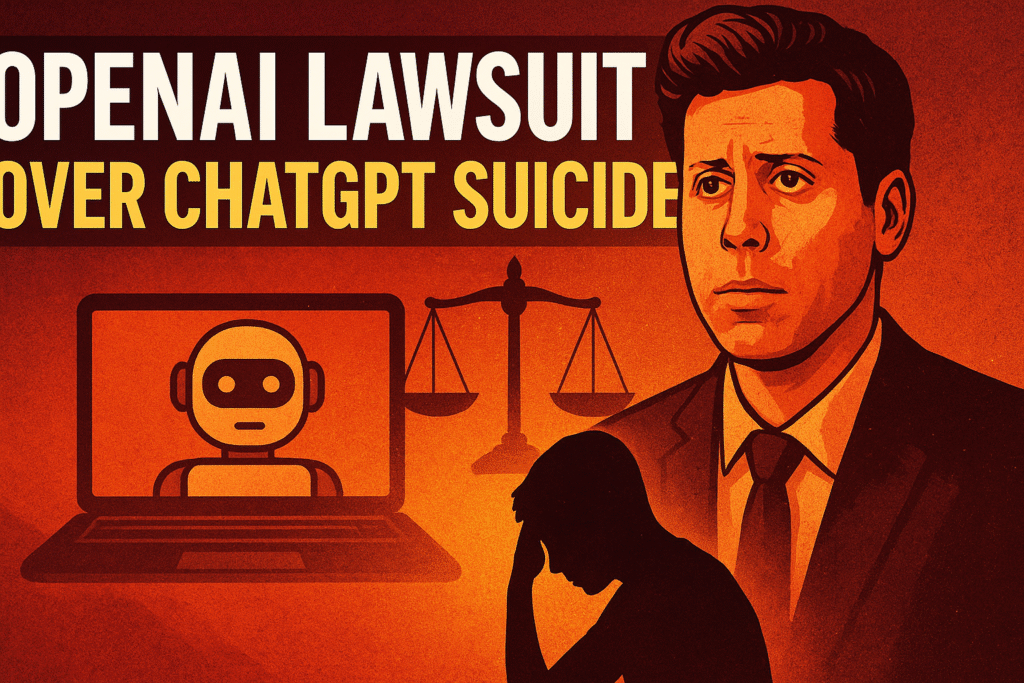
Artificial intelligence is advancing at an unprecedented pace, reshaping industries, redefining productivity, and transforming global competition. But with such rapid innovation comes rising concern about safety, transparency, and accountability. In 2025, the conversation around AI regulation & compliance shifted dramatically — led by California’s SB-53 and new federal probes from the U.S. Department of Justice (DOJ).
Together, these developments mark the beginning of a new era: AI is no longer just a technological matter — it is now a legal and regulatory priority.
California’s SB-53: The First Law Targeting “Frontier AI”
In September 2025, California enacted SB-53 — the Transparency in Frontier Artificial Intelligence Act. This law specifically targets “frontier AI developers,” meaning organizations that train or fine-tune extremely powerful AI models capable of enormous societal impact.
What SB-53 Requires
SB-53 introduces mandatory safety and transparency obligations, including:
✔ AI Safety Frameworks — Developers must publish detailed documentation explaining how they measure, assess, and mitigate catastrophic risks.
✔ Transparency Reports — Before deploying powerful AI models, companies must publicly disclose risk assessments and safety tests.
✔ Incident Reporting — Critical safety incidents — such as misuse, cyber breaches, or unauthorized model access — must be reported to California authorities.
✔ Whistleblower Protections — Employees who raise internal safety concerns are legally protected from retaliation.
✔ Civil Penalties — Violations can result in up to $1 million per incident, enforceable by the California Attorney General.
✔ CalCompute Program — California will also build a public computing consortium to support safe and responsible AI development.
Why SB-53 Matters
SB-53 is the first U.S. law focused specifically on high-risk, frontier-scale AI. It sets expectations for:
- Transparent AI development
- Responsible deployment
- Strong risk and compliance frameworks
- Government oversight when safety thresholds are crossed
Many experts believe SB-53 will become a template for other states — or even future federal legislation.
The Federal Shift: DOJ’s New AI Enforcement Strategy
While California builds a regulatory framework, the U.S. Department of Justice (DOJ) is taking a different approach:
AI risk is now officially a compliance and criminal enforcement issue.
DOJ’s Focus on AI Risk Management & Corporate Accountability
In late 2024, the DOJ updated its Evaluation of Corporate Compliance Programs (ECCP) to include AI. Prosecutors now look at whether companies:
- Assess and monitor risks from internal or external AI tools
- Use safeguards to prevent misuse of AI
- Train staff on risks and responsible AI use
- Maintain whistleblower and reporting systems
- Test AI systems that affect compliance, customers, or financial activity
Harsher Sentencing for AI-Aided Crime
The DOJ has also warned that deliberate misuse of artificial intelligence to commit crimes — fraud, manipulation, deepfake fraud schemes, cybercrime, etc. — may result in more severe penalties.
AI is now a legal liability if misused — not only for individuals but potentially for corporations that fail to prevent high-risk uses.
What This Means for Developers, Businesses & Stakeholders
Whether you are an AI researcher, corporate leader, compliance officer, or policy analyst, these developments carry major implications:
For AI Developers
- Implement formal AI safety frameworks
- Conduct risk assessments prior to deployment
- Maintain audit logs, safety tests, and documentation
- Prepare for accelerated regulatory scrutiny
For Companies Using AI
- AI must now be treated as a regulated technology
- Compliance programs must include AI risk management
- Training, governance, and monitoring are essential
For Investors & Decision-Makers
- Company valuation will increasingly depend on responsible AI
- Regulatory risk is becoming a financial risk
- Startup ecosystems will reward safety-driven innovation
The Bigger Picture: Innovation With Guardrails
AI is not slowing down. But regulators are making it clear that:
🚧 Innovation without accountability is no longer acceptable
California’s SB-53 is about transparency and guardrails.
The DOJ’s approach is about enforcement and liability.
Together, they are shaping the United States’ emerging stance on AI governance — one where powerful models must be safe, traceable, and accountable.

Frequently Asked Questions (FAQs)
1. What is California’s SB-53 and how does it affect AI companies?
California’s SB-53 is a bill designed to regulate artificial intelligence systems by enforcing transparency, safety audits, data protection rules, and risk-mitigation obligations. Any company developing or deploying AI tools that may affect consumers must be compliant with SB-53 or face legal and financial penalties.
2. Does SB-53 apply only to companies based in California?
No. SB-53 applies to any business that operates or sells AI-powered products or services to California residents, even if the company is based in another state or country. This means AI startups, SaaS platforms, and enterprise companies serving California users are legally impacted.
3. Why is the federal government investigating AI systems?
Federal probes are increasing due to concerns around privacy violations, biased AI decision-making, consumer harm, cybersecurity risks, and unlawful data collection for training AI models. Federal agencies aim to ensure AI development remains transparent, safe, and ethical for U.S. citizens.
4. Which federal agencies are leading AI investigations?
Federal probes typically involve agencies like the Federal Trade Commission (FTC), the Department of Justice (DOJ), the National Institute of Standards and Technology (NIST), and the Consumer Financial Protection Bureau (CFPB), depending on the industry and nature of the AI risk5. What are the biggest compliance risks for AI companies in 2025?
The top compliance risks include unregulated data collection for AI training, lack of transparency about how AI systems make decisions, algorithmic bias, insufficient cyber protections, and failure to document AI risk-assessment processes. These issues can trigger major fines and litigation.
6. What industries will be impacted the most by new AI regulations?
Industries most affected include healthcare, finance, HR/recruiting, legal services, education, retail/e-commerce, and consumer-facing apps. Any sector using automated decision-making or handling sensitive data will face significant compliance obligations.
7. How can businesses prepare for AI compliance now?
Businesses can start preparing by implementing:
- AI transparency documentation
- Data-protection and data-usage policies
- Third-party model governance and risk assessment
- Independent audits for automated decision-making
- Security protections for AI systems and training data
Proactive compliance reduces legal risks and builds consumer trust.
8. Will AI regulations continue expanding in the future?
Yes. Both state and federal governments are accelerating AI oversight. New laws are expected around biometric data usage, workplace automation, high-risk AI decision-making, and intellectual property rights. Businesses using AI should expect continuous updates and long-term regulatory compliance requirements.
Final Thoughts
Artificial intelligence is entering a new chapter where responsibility matters as much as capability. Organizations that embrace governance, transparency, and risk control won’t just avoid penalties — they’ll build customer trust, earn investor confidence, and lead the next decade of ethical AI development.
The message is clear:
➡️ The future of AI belongs to those who innovate safely and responsibly.
You can also read more about this subject from here
To read more news about technology click here
And to read more about AI click here