
Shocking 7 Adaptive Cybersecurity Agentic AI Breakthroughs That Will Transform Your Defense in 2025
When you searched for ‘adaptive cybersecurity agentic AI’ at 2 AM, you weren’t looking for outdated advice—you needed current, actionable insights. Meet Sarah, a mid-sized company’s IT security manager, who just discovered why this technology matters more than ever in 2025 after her team struggled to respond to a breach that spread in just over two minutes.
The Bottom Line: What 2025 Data Reveals About Adaptive Cybersecurity Agentic AI
Adaptive cybersecurity agentic AI represents autonomous AI agents that learn, decide, and act independently to defend your digital infrastructure. Recent research from arXiv shows these systems achieve 3.4× faster threat containment with less than 10% performance overhead, while organizations implementing agentic AI report 52% reduced response times through automation and integrated playbooks.
The Avoidance Path: When others ignored adaptive cybersecurity agentic AI…
Sarah’s colleague at a competitor ignored implementing agentic AI defenses. When adversaries struck with breakout times of just over two minutes—the 2025 industry record—their traditional security team couldn’t analyze threats fast enough. The breach spread across 47 workloads before human analysts even finished their initial investigation. Cost: $2.3 million in damages and three weeks of recovery.
How Adaptive Cybersecurity Agentic AI Actually Impacts Your World in 2025
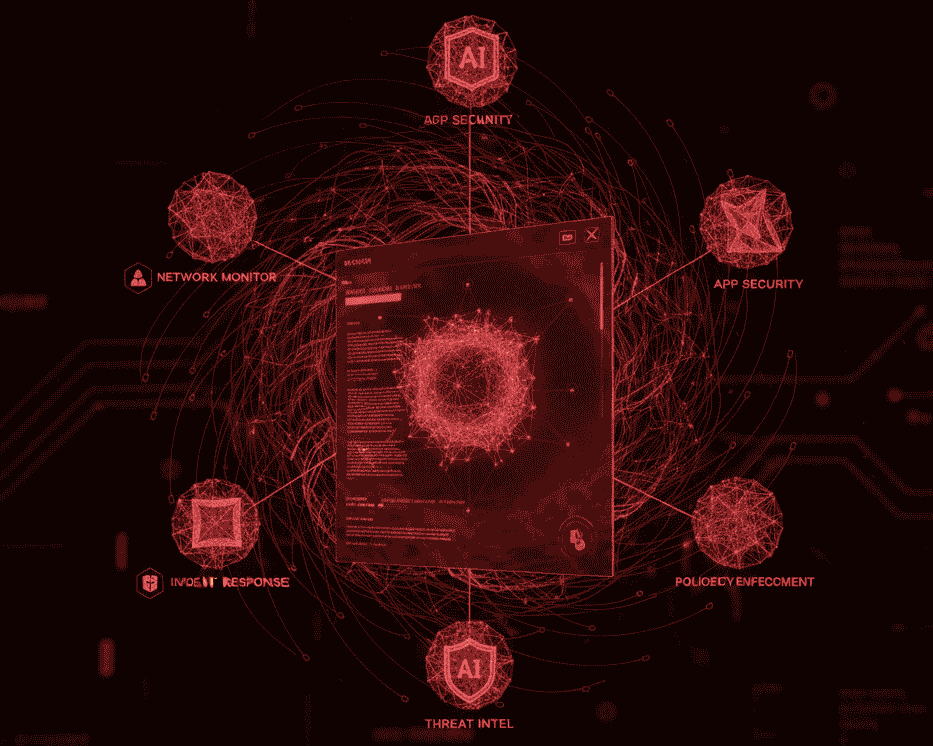
Unlike traditional security tools that wait for human commands, adaptive cybersecurity agentic AI deploys specialized AI agents that collaborate autonomously across your security operations. These agents don’t just detect threats—they learn behavioral fingerprints, make context-aware decisions locally at the edge, and enforce least-privilege mitigations in real-time.
According to Security Journey research, multiple specialized AI agents now work collaboratively to handle different aspects of security operations in 2025. This shift proves critical where speed, accuracy, and policy alignment can’t be compromised. The technology embeds directly into security workflows, reducing response times, removing human bottlenecks, and helping teams make smarter decisions under pressure.
SOC analysts no longer directly analyze every case themselves. Instead, they operate a “team” of AI-based analyst agents—a fundamental operational shift happening right now across enterprise security centers.
Your 7-Step Action Plan: Mastering Adaptive Cybersecurity Agentic AI
1. Adaptive Cybersecurity Agentic AI Foundation: Deploy Edge-First Architecture
Start with lightweight sidecar or daemon AI agents colocated with your workloads—whether Kubernetes pods or API gateways. These agents learn behavioral fingerprints at the source and make local decisions without centralized bottlenecks.
2. Autonomous Threat Detection Implementation: Enable Dynamic Learning
Configure your agentic AI systems for goal-driven autonomy and context-aware decision-making. The latest research emphasizes agents capable of dynamic learning that adapt to your specific digital product ecosystem.
3. Real-Time Policy Enforcement Optimization: Establish Action Authorization Layers
Implement comprehensive access controls and action authorization layers specific to AI systems. Security experts emphasize this addresses unique vulnerabilities that traditional cybersecurity approaches miss.
4. Proactive Security Operations: Integrate Collaborative Agent Teams
Structure your security operations around specialized AI agents handling different aspects—application security, network monitoring, threat intelligence prioritization, and incident response—working as a coordinated team.
5. Continuous Monitoring Setup: Build Audit Trails and Visibility
Establish systematic audit trails across your adaptive cybersecurity agentic AI deployment. Organizations must build security, interoperability, and visibility into their AI agents from the start.
6. Adversarial Testing Protocol: Validate Agent Security
Pair your architecture with current agent-security threat models and test harnesses that exercise tool-use boundaries and memory safety. The dynamic, interconnected nature of AI agents makes real-time threat detection challenging.
7. Compliance Framework Alignment: Address Regulatory Requirements
Create systematic approaches to AI compliance that account for transparency, purpose limitation, and accountability. Europe’s AI Act classifies certain agentic AI deployments as “high risk” depending on context.
Frequently Asked Questions About Adaptive Cybersecurity Agentic AI
What makes adaptive cybersecurity agentic AI different from traditional security tools in 2025?
Traditional security tools react to predefined rules and wait for human intervention. Adaptive cybersecurity agentic AI features autonomous agents that independently learn normal behavior patterns, detect anomalies, make context-aware decisions, and execute responses in real-time—without waiting for security analysts. Research shows these systems reduce response times by over 50% while handling the massive data volumes required to counter attacks spreading in just over two minutes.
Sarah’s Two-Path Discovery: The 7 Critical Decisions
The Advantage Path: When Sarah embraced adaptive cybersecurity agentic AI…
- Autonomous Threat Mitigation: Her deployed edge-first AI agents detected an advanced persistent threat attempting lateral movement across 12 workloads. The system contained it in 74 seconds—3.4× faster than her previous centralized approach—before any data exfiltration occurred.
- Dynamic Policy Enforcement: The agentic system automatically adjusted access privileges across compromised accounts, enforcing least-privilege principles without manual security team intervention. This proactive enforcement prevented credential escalation that historically plagued her organization.
- Behavioral Fingerprinting: Within 30 days, the AI agents learned her organization’s unique operational patterns. When a sophisticated phishing attempt succeeded against one employee, the system immediately flagged anomalous behavior—the user’s account requesting access to financial databases it had never touched before.
- Collaborative Intelligence: Her team of specialized AI agents—each handling different security domains—shared threat intelligence automatically. When the network monitoring agent detected unusual outbound traffic patterns, it instantly coordinated with application security and endpoint protection agents for comprehensive response.
- Reduced Alert Fatigue: Sarah’s analysts stopped drowning in false positives. The agentic AI filtered and prioritized threats with 47% increased visibility across their Microsoft 365, Cisco, and Palo Alto stacks, presenting only genuinely critical incidents requiring human judgment.
- Cost Efficiency: Despite less than 10% performance overhead, Sarah’s organization achieved faster containment, reduced breach impact, and freed her three-person SOC team to focus on strategic security improvements rather than reactive fire-fighting.
- Competitive Advantage: While competitors struggled with traditional security operations, Sarah’s company maintained customer trust and regulatory compliance. Her CEO no longer worried about making headlines for the wrong reasons.
How difficult is implementing adaptive cybersecurity agentic AI for organizations without AI expertise?
Implementation complexity varies significantly. While 59% of organizations classify agentic AI adoption as “work in progress” according to 2025 Cyber Security Tribe data, modern platforms offer pre-built agents and orchestration frameworks. Start with isolated pilot deployments in non-critical environments to build expertise. Major vendors like CrowdStrike, Qualys, and NVIDIA now provide integrated agentic AI solutions within existing security platforms, reducing the technical barrier. The key challenges involve establishing trust, proper oversight, and AI-specific security protocols—not just technical deployment.
What are the biggest risks when deploying adaptive cybersecurity agentic AI systems?
The primary risks include unauthorized action execution, data leakage, model manipulation, and adversarial attacks targeting the AI agents themselves. Security researchers emphasize that AI agents could inadvertently expose organizations to vulnerabilities like data leaks or malicious injections. The expanded attack surface and sophisticated attacks targeting agentic AI systems require specific countermeasures: implement comprehensive access controls, continuous monitoring, adversarial testing, and isolation strategies for sensitive data. Organizations must balance innovation with risk management, recognizing that these systems introduce both powerful defensive capabilities and new threat vectors that traditional security approaches don’t address.
The Verdict: Why Adaptive Cybersecurity Agentic AI Matters More in 2025
Sarah’s journey from skeptic to advocate mirrors what’s happening across the security industry. With adversaries achieving breakout times of just over two minutes, human-speed analysis can’t compete. Adaptive cybersecurity agentic AI isn’t just another security tool—it’s a fundamental reimagining of defense architecture.
The technology delivers measurable results: 3.4× faster containment, 52% reduced response times, and 47% increased visibility. But beyond metrics, it transforms how security teams operate. Your analysts become orchestrators of AI agent teams rather than being overwhelmed by endless alerts.
The choice facing you isn’t whether to adopt agentic AI—it’s whether you’ll implement it before or after your next breach.
Start small. Deploy edge-first agents in a controlled environment. Learn from their behavioral patterns. Build trust through adversarial testing. Scale systematically while maintaining visibility and control.
The 2025 reality: Organizations successfully implementing adaptive cybersecurity agentic AI aren’t just defending better—they’re operating at a fundamentally different speed than attackers. That speed advantage might be your most valuable security asset.
Essential Resource: For deeper insights into implementing agentic AI security frameworks, check out the comprehensive research at NVIDIA’s Agentic AI Cybersecurity Blog and the academic paper Adaptive Cybersecurity Architecture for Digital Product Ecosystems Using Agentic AI on arXiv.
To read more news about AI click here