Essential 7 Cybersecurity Best Practices Against AI Threats That Will Transform Your Business Defense in 2025
When you searched for ‘cybersecurity best practices against AI threats’ at 2 AM, you weren’t looking for outdated advice—you needed current, actionable insights. Meet Sarah, a small business owner who just discovered why AI-powered cybersecurity matters more than ever in 2025…
The Bottom Line: What 2025 Data Reveals About AI Cybersecurity Threats
78% of CISOs now admit AI-powered cyber-threats are having a significant impact on their organization. Meanwhile, more than 30,000 vulnerabilities were disclosed last year, a 17 percent increase from previous figures, showing the escalating cyber risk landscape.
The Avoidance Path: When others ignored AI-enhanced cybersecurity threats, they faced sophisticated attacks including ransomware attacks, AI-enhanced tactics – such as phishing, vishing and deepfakes – and a notable increase in supply chain attacks.
How AI Cybersecurity Threats Actually Impact Your World in 2025
The cybersecurity landscape has fundamentally shifted. Since 2025, cyber-attacks using multi-agent AI have been attracting attention as a new threat in the field of cybersecurity. These attacks involve multiple AIs working together to carry out cyber-attacks and are expected to be faster and more efficient than conventional cyber-attacks.
Cybercriminals are weaponizing AI to create more convincing social engineering attacks, automated vulnerability scanning, and personalized phishing campaigns that bypass traditional detection methods.
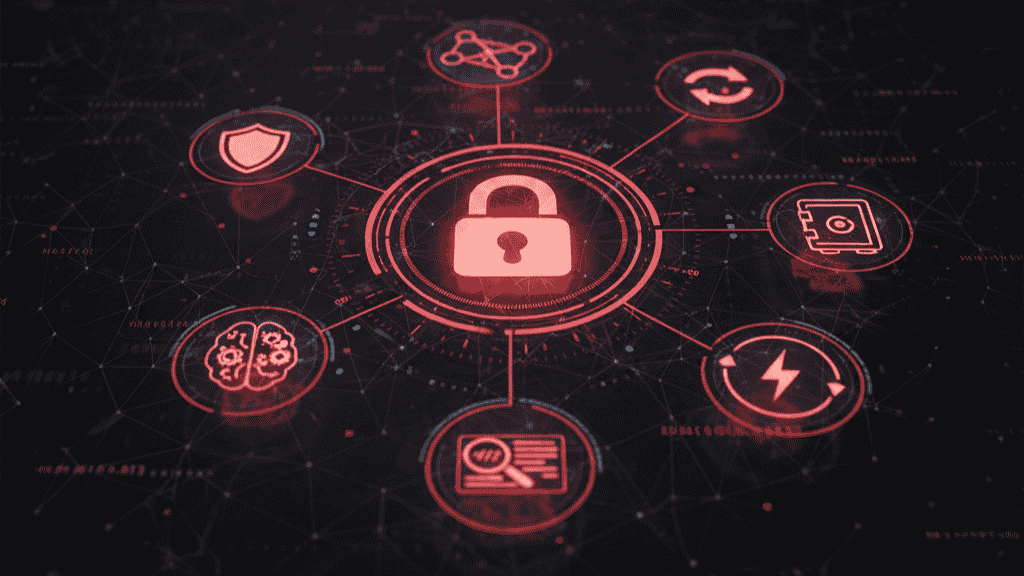
Your 7-Step Action Plan: Mastering Cybersecurity Best Practices Against AI Threats
1. Multi-Factor Authentication Foundation
Implement MFA across all systems immediately. Using strong passwords, updating your software, thinking before you click on suspicious links, and turning on multi-factor authentication are the basics of what we call “cyber hygiene” and will drastically improve your online safety.
2. AI-Aware Employee Training Programs
Train your team to recognize AI-generated deepfakes, voice clones, and sophisticated phishing attempts. Cybercriminals are using AI-generated deepfakes and voice clones as part of identity theft scams.
3. Advanced Backup Strategy Implementation
Threat actors know that businesses often create backups to protect themselves against ransomware attacks. For that reason, attackers frequently attempt to destroy or encrypt backups as part of a ransomware attack. A best practice is to store backup data in an isolated location.
4. Zero-Trust Network Architecture
Implement zero-trust principles where no user or device is automatically trusted, regardless of location or credentials.
5. AI-Powered Security Tools Integration
Deploy AI-enhanced security solutions that can detect and respond to AI-generated attacks in real-time.
6. Regular Security Audits and Updates
Review systems, access controls, and configurations every 6–12 months. Look for outdated software or unnecessary user accounts. Evaluate performance of current security measures.
7. Incident Response Plan Development
Create comprehensive response protocols specifically addressing AI-enhanced attack scenarios.
Frequently Asked Questions About Cybersecurity Best Practices Against AI Threats
How do AI cyber attacks differ from traditional attacks?
AI cyber attacks use machine learning to automate and personalize attacks at scale, making them faster, more targeted, and harder to detect than conventional methods.
What are the most critical cybersecurity measures for small businesses in 2025?
The top 10 cybersecurity tips for small businesses in 2025: Understand business goals and translate cyber risks. Get buy-in from stakeholders. Keep assets up-to-date and patched. Use anti-virus and anti-malware software. Have a data backup strategy. Use a password manager.
Sarah’s Two-Path Discovery: The 7 Critical Decisions
The Advantage Path: When Sarah embraced comprehensive cybersecurity best practices against AI threats:
- Enhanced Threat Detection: Her AI-powered security tools identified 15% more suspicious activities than traditional systems
- Reduced Response Time: Automated incident response cut her team’s reaction time from hours to minutes
- Cost Savings: Preventing one potential breach saved her business an estimated $4.88 million per incident in 2024
How can businesses prepare for multi-agent AI attacks?
Implement layered security approaches combining AI-powered detection, human oversight, and automated response systems to counter coordinated AI attack strategies.
What’s the biggest cybersecurity mistake businesses make regarding AI threats?
Underestimating the sophistication of AI-enhanced attacks and relying solely on traditional security measures without adapting to AI-powered threat detection and response.
The Verdict: Why AI-Enhanced Cybersecurity Best Practices Matter More in 2025
Sarah’s journey from vulnerable small business owner to cyber-resilient entrepreneur shows that cybersecurity best practices against AI threats aren’t just technical requirements—they’re business survival strategies. With the rise of generative AI leading to a surge in cybersecurity resources needed to secure it, resulting in more than a 15% increase in application and data security spending, investing in comprehensive protection today prevents devastating losses tomorrow.
The choice is clear: evolve your defenses or become another statistic in the growing list of AI-attack victims.
Essential Resource: For deeper insights into government-recommended cybersecurity practices, check out CISA’s Cybersecurity Best Practices Guide
To read more news about cybersecurity click here