
Introduction
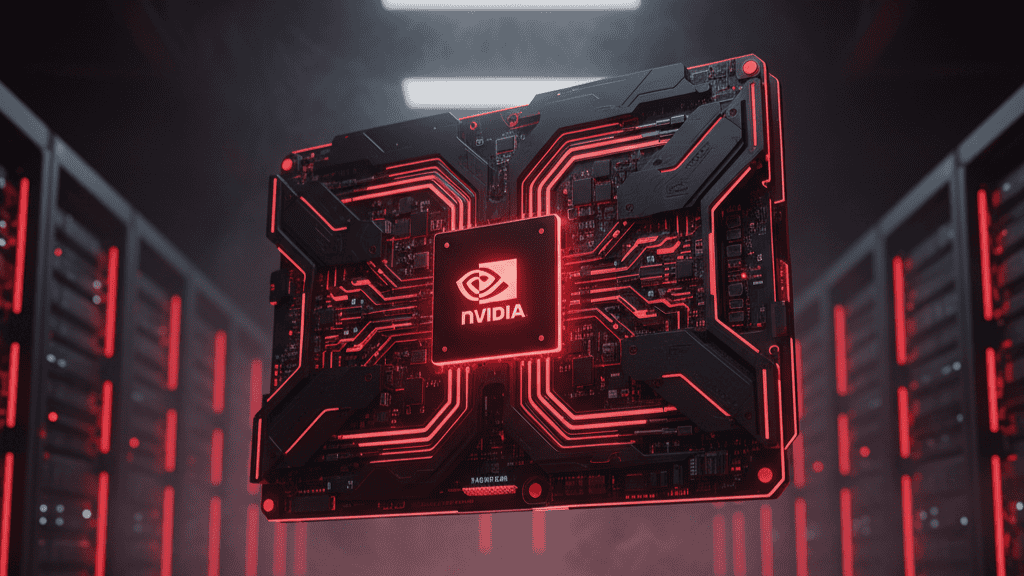
In an era where artificial intelligence workloads are exploding in scale and complexity, NVIDIA has taken a decisive step forward with its latest architectural leap: the Vera Rubin Superchip. With the marriage of a custom CPU (“Vera”) and dual high-performance GPUs (“Rubin”) on a single board, NVIDIA is redefining what next-gen AI infrastructure can look like. The announcement not only signals a technological jump but also maps out the roadmap for AI hardware for the coming years.
What is the Vera Rubin Superchip?
- The platform pairs a custom 88-core Vera CPU (176 threads) with two Rubin GPUs on one board.
- Each Rubin GPU reportedly uses a multi-chiplet design—two compute chiplets plus I/O and memory stacks (HBM4) per GPU.
- The board also integrates SOCAMM/LPDDR modules as system memory, high-bandwidth interconnect (NVLink), and a rack-scale design targeting exascale AI workloads.
- Performance targets are staggering: up to ~100 petaFLOPS (FP4) compute for the dual Rubin setup.
Why It Matters: Key Breakthroughs
- Tight CPU-GPU Integration
For the first time in NVIDIA’s datacenter roadmap, the CPU (Vera) and GPUs (Rubin) are co-packaged and designed for symbiosis—reducing latency, increasing bandwidth, and optimizing memory flows for massive AI models. - Massive Performance Uplift
Compared to existing platforms (like Grace + Blackwell), the Vera Rubin design targets multiple-fold increases in throughput for inference and large-model training. - Precision Shift & Memory Bandwidth Focus
The architecture emphasises FP4 and other low‐precision formats, which are critical for large language models (LLMs) and generative AI workflows. Combined with HBM4 and high-bandwidth links, it’s built for scale. - Data Center & AI Roadmap Implications
This is not just a chip—NVIDIA envisions rack-scale modules (NVL144, NVL576) built on Vera Rubin, marking the next era of AI infrastructure.
Technical Highlights & Specifications
| Component | Highlights |
| Vera CPU | 88 custom ARM-based cores, 176 threads. |
| Rubin GPUs | Dual GPU configuration per board; each GPU uses multiple chiplets + HBM4 memory stacks. |
| Memory System | HBM4 for GPUs, SOCAMM/LPDDR modules for system memory. |
| Interconnect | NVLink-C2C and advanced backplane connectors, enabling ~1.8 TB/s bandwidth in some designs. |
| Performance Target | Up to ~100 PFLOPS FP4 performance for the full board. |
| Timeline | Production samples late 2025, general availability late 2026 / 2027. |

Use‐Cases & Potential Impact
- Large Language Models & Generative AI: With huge memory, high throughput, and optimized FP4 precision, Vera Rubin is made for training/deploying the next-gen LLMs.
- HPC & Scientific Computing: While precision might skew lower (FP4), the architecture’s memory and compute scale open doors for massive simulation and modeling workloads.
- AI Inference at Scale: Cloud providers, hyperscalers can use rack versions of this platform to deliver inference services with lower latency and higher efficiency.
- Edge to Data Center Continuum: While primarily data-center focused, the design trickle-downs may influence workstation and enterprise AI hardware.
Competitive Landscape & Industry Implications
NVIDIA’s unveiling of Vera Rubin signals that the AI hardware arms race is entering a new phase. From the published roadmap:
- The predecessor architecture (Blackwell / Hopper) is still shipping, but the new platform raises the bar significantly.
- Competitors such as AMD, Intel and custom ASIC firms will need to respond to this leap or risk falling behind.
- For enterprises and cloud providers, this means planning for hardware refresh cycles around 2026+ to remain competitive.
- Wider implications: as compute becomes more abundant and cheaper per unit, AI models may grow in size and ambition accordingly, shifting business models and research direction.
Challenges & Things to Watch
- Software & Ecosystem: Hardware leaps are only useful if software (frameworks, compilers, model optimizations) keeps up.
- Power & Cooling: Exascale‐class boards will require advanced cooling (likely liquid cooled) and power delivery—data centers will need to adjust.
- Precision & Compatibility: Focusing on FP4 means some workloads relying on higher precision (FP64, FP32) may not benefit as much.
- Supply Chain & Timing: NVIDIA’s timelines (late 2026/2027) are ambitious; any delay in manufacturing or packaging may impact adoption.
- Cost & ROI: For many organizations, the massive performance will come at high upfront cost—calculating ROI becomes more critical.
Conclusion
The Vera Rubin Superchip from NVIDIA is more than just another chip—it represents a generational shift in how AI infrastructure will be built, deployed and consumed. With custom CPUs, next-gen GPUs, massive memory bandwidth and a clear roadmap toward exascale AI, it sets the stage for the next wave of AI advances. For developers, researchers, cloud providers and emerging markets alike, the message is clear: prepare now for a new computing era.
NVIDIA Rubin CPX announcement (official)
To read more news about technology click here