
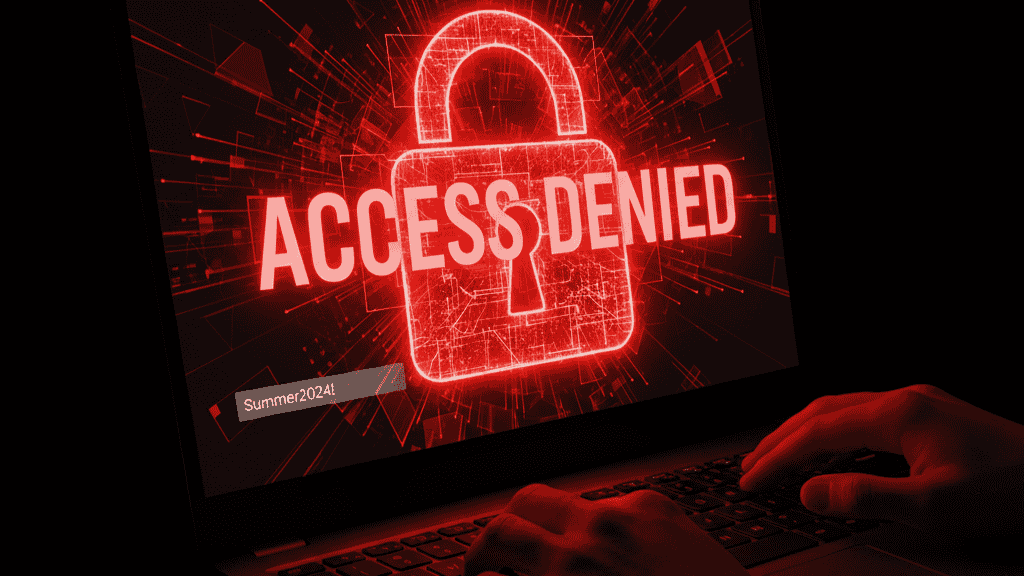
When you searched for ‘password security best practices 2025’ last night, you weren’t just looking for another generic security checklist. You wanted real protection that actually works against today’s sophisticated hackers. Meet Sarah, a marketing manager who thought her clever “Summer2024!” password was unbreakable—until it wasn’t.
The Bottom Line: What 2025 Data Reveals About Password Reality
The stats are sobering: 123456, admin, 12345678 and 123456789 remain the most common passwords, while 33% of people reuse passwords on 1-5 sites, 26% reuse passwords on 6-10 sites, and 11% use the same password to secure more than 15 sites. Even worse, the average person manages about 168 passwords across personal accounts and 87 for business accounts—that’s over 250 passwords per person.
Sarah’s Two-Path Discovery: The 7 Critical Security Decisions
The Advantage Path: When Sarah adopted NIST’s 2025 guidelines…
- Password Length Over Complexity: NIST now focuses on password length over complexity, recommending minimum 8 characters for standard accounts and 15 characters for high-security systems
- Multi-Factor Authentication (MFA): CISA and NIST consistently urge the implementation of MFA as the first security step
- Password Manager Adoption: NIST encourages the use of password managers to eliminate the usual frustration while maintaining security
- Unique Passwords Per Account: Sarah generates completely different passwords for each of her 168 personal accounts, eliminating cascade breaches
- Breach Monitoring Integration: Real-time alerts when her credentials appear in new data breaches, allowing immediate action
- Annual Security Audits: Following NIST’s guidance to avoid frequent password changes while conducting yearly comprehensive reviews
- Passkey Migration: Transitioning to passwordless authentication where supported, reducing password dependency entirely
The Avoidance Path: When others stuck with “password123″…
- Common Password Catastrophe: Superman appeared in 584,697 data breaches as the most hacked pop culture password
- Reuse Vulnerability: Nearly half of people reuse passwords across multiple accounts, both personal and work-related, exponentially increasing vulnerability
- Complexity Over Length Confusion: Still using short passwords like “P@ssw0rd1!” believing symbols trump length, while remaining easily crackable
- MFA Avoidance: Skipping two-factor authentication because it seems “inconvenient,” leaving accounts completely exposed to breaches
- Manual Password Management: Writing passwords on sticky notes or storing in browser autofill without encryption
- Reactive Security: Only changing passwords after major breaches make headlines, missing personal account compromises
- Password Fatigue: Getting overwhelmed by security requirements and defaulting to weak, repeated patterns across all accounts
How Modern Password Security Actually Protects You in 2025
Recent breach analysis shows the human resources sector performs best with 31% unique passwords, while telecommunications had only 20% unique passwords. The landscape has evolved beyond simple complexity requirements. Organizations should not require password resets more than once per year and should monitor new passwords daily, testing them against lists of common and compromised passwords.
The key shift? Passwords less than 12 characters or using only lowercase letters remain vulnerable to brute force attacks, but length now trumps complexity symbols.
Your 7-Step Action Plan: Mastering Password Security Best Practices 2025
1. Foundation: Embrace Length Over Complexity
Ditch “P@ssw0rd1!” and embrace “correct-horse-battery-staple-methodology.” NIST advocates minimum 15 characters for maximum security. Think memorable phrases, not cryptic symbols.
2. Implementation: Deploy Multi-Factor Authentication Everywhere
The first thing you should do is add multifactor authentication. Enable MFA on email, banking, social media, and work accounts. It’s your digital bodyguard.
3. Password Manager Mastery
Use unique and complex passwords for every account, ideally at least 12 characters. Let technology remember so you don’t have to reuse.
4. Annual Password Hygiene
Don’t change passwords more than once per year unless there’s a breach. Focus on quality over frequent changes.
5. Breach Monitoring
Never email your password, store it in documents, or write it down on paper. Use breach monitoring services to stay ahead of compromised credentials.
6. Account-Specific Strategy
59% of financial services companies operate with concerning password practices—don’t rely solely on their security. Layer your protection.
7. Future-Proofing with Passkeys
Transition toward passwordless authentication where available. Biometric and hardware keys represent the evolution beyond traditional passwords.
Frequently Asked Questions About Password Security Best Practices
What makes a password truly secure in 2025?
Length is the primary factor—15+ characters minimum, combined with uniqueness per account and MFA protection. Complexity symbols matter less than overall entropy.
Should I really use a password manager for everything?
NIST encourages password manager adoption to eliminate frustration while maintaining security. The math is simple: humans can’t reliably manage 250+ unique passwords mentally.
How often should I change my passwords?
Organizations should not require password resets more than once per year. Change passwords only after breaches or suspected compromise, not on arbitrary schedules.
The Verdict: Why These Password Security Best Practices Matter in 2025
Sarah’s journey from “Summer2024!” to a comprehensive password security strategy represents millions of users awakening to modern threats. With millions of passwords hacked worldwide, your security posture determines whether you become a statistic or stay protected.
The 2025 landscape rewards length over complexity, embraces technology over memory, and prioritizes practical security over theoretical perfection. Your digital life deserves nothing less than bulletproof protection.
Essential Resource: For the latest security guidelines, check out NIST’s official password recommendations
To read more news about cybersecurity click here